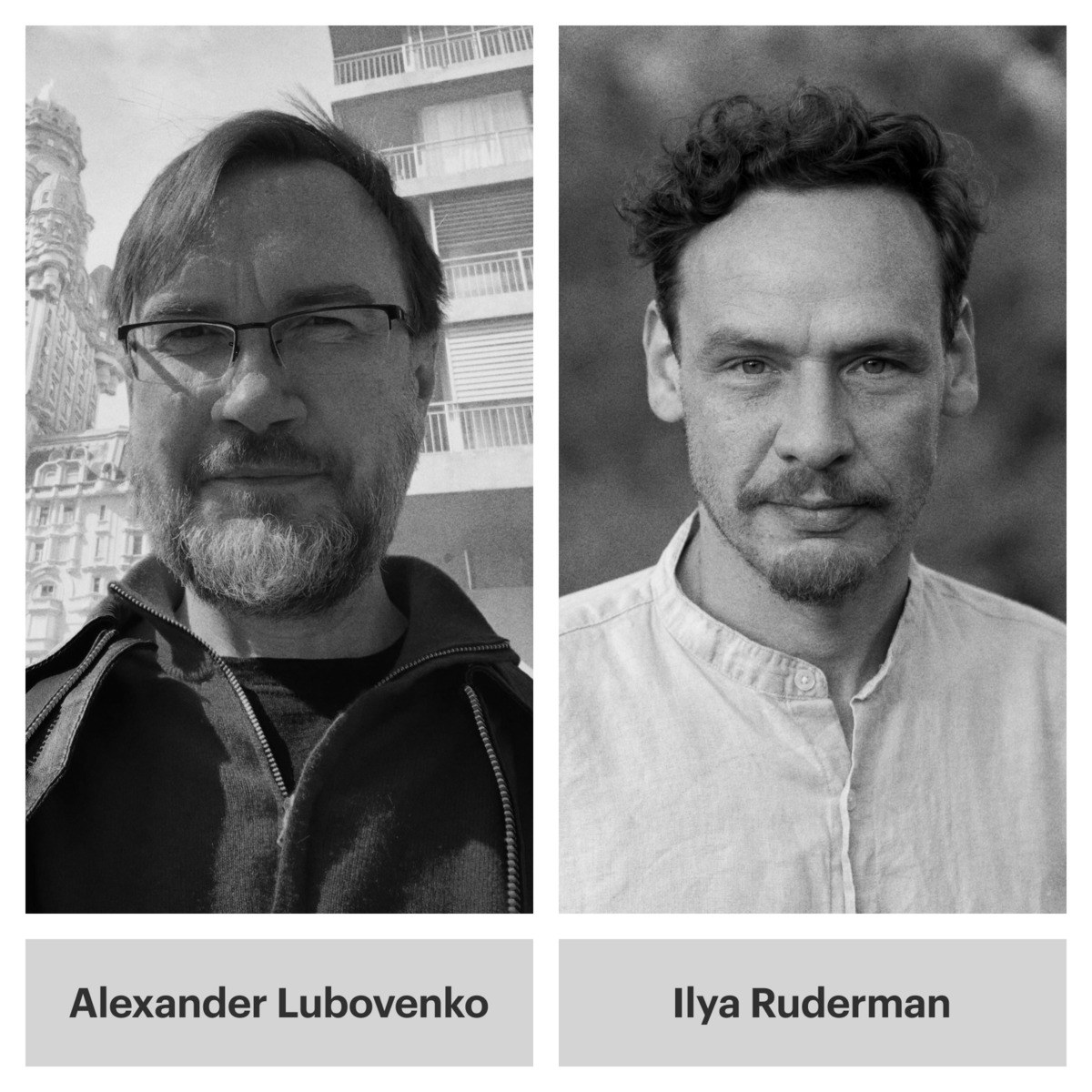
Adelina Shaidullina: Since our audience consists primarily of graphic designers, let’s start by talking about what an engineer actually does.
Alexander Lubovenko: An engineer, for instance, may be asked to adjust metrics, put together OpenType features, generate .otf or .ttf files, test how they work across various applications, and upload them to tools like Font Bakery. Sometimes they might also be needed to rebuild the diacritics or adjust their height.
AS: What do you mean by ‘rebuilding the diacritics’?
AL: It might happen that a designer makes adjustments to the typeface and the accents end up in the wrong places. Then they need
AS: Which of the things you’ve listed is AI already capable of?
AL: It can do pretty much everything that I mentioned. For instance, someone comes and says, ‘I have two fonts, and when I use them in Figma they are
AS: Doesn’t that corrupt the file? If the fonts are adjusted for Figma, won’t they end up being improperly rendered in Illustrator?
AL: They won’t. In this sense, artificial intelligence is actually better than a real
AS: Does one need any special knowledge of how AI works to do this?
AL: I don’t think so. Someone recently reached out to me saying the fonts in their PowerPoint presentation were behaving in a weird way. The nature of the request made it clear they’re used to working in graphic editor software where all fonts are displayed as a nice list in a menu, and everything is really convenient. PowerPoint, Word, and other Microsoft tools handle fonts in a really specific manner, hiding certain font styles based on the assumption that, say, Bold shouldn’t appear as a separate item in the menu.
So this person approached me with a ready response from ChatGPT. The AI wrote to them, ‘Here’s how you can solve the problem’. I read the solution and thought, ‘Everything seems correct’, but I felt like there still might be an error. I copied the report to Claude and said, ‘Hey man, check this out’. Claude responded that GPT was right, but pointed out a couple of details and then corrected the
The person who reached out to me was quite
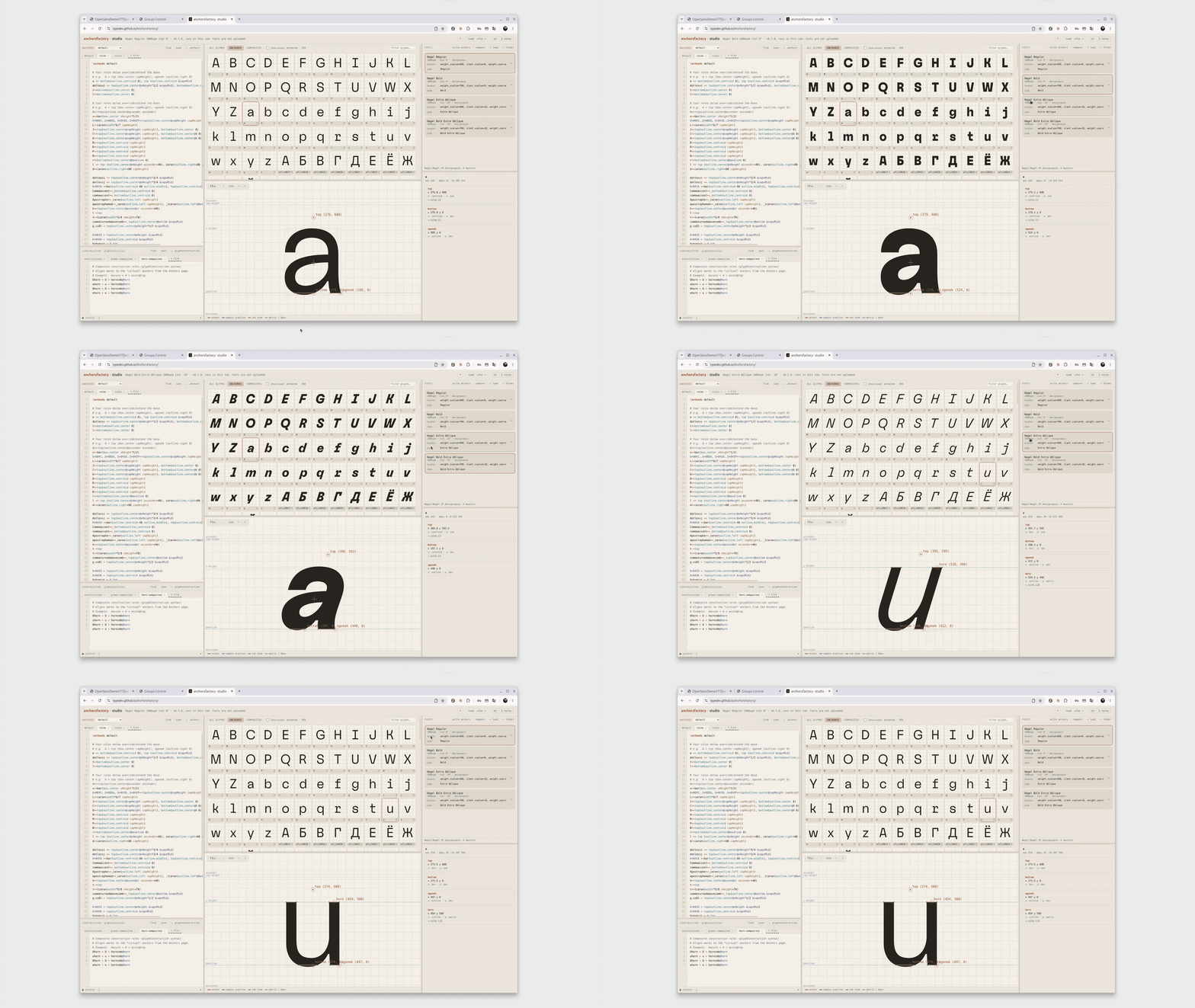
A DSL for defining anchor positions and a web application for working with it. The language allows anchor positions to be linked to glyph components
Ilya Ruderman: Our customers are now reaching out with technical requests less often. Perhaps they’re now also using Claude and ChatGPT and fixing If you’re planning to ‘fix’ a font using AI, make sure it doesn’t violate the font’s license things by themselves.
AS: Why then do fancy
AL: That’ll catch up with them, too, eventually. I think designers will soon enough realise that they don’t need an engineer anymore to answer the question, ‘What’s wrong with this file?’ This role might still be necessary in major foundries that manage massive
AS: AI tools already have a huge amount of data when it comes to Latin and Cyrillic, but what about less common scripts, such as Georgian? Will those still be handled by human engineers?
IR: I actually have a recent story to answer your question. I am currently extending Onweer, adding Georgian and Armenian. I’ve used AI to build a number of proofing tools for
I don’t speak any of the languages that use these writing systems, while each of them has its own subtleties. The Svan language, for instance, features diacritics, whereas in Armenian, there are variations in the form of the same character depending on whether it’s from the language used in the diaspora or within Armenia itself. AI is aware of these details. The proofers turned out great.
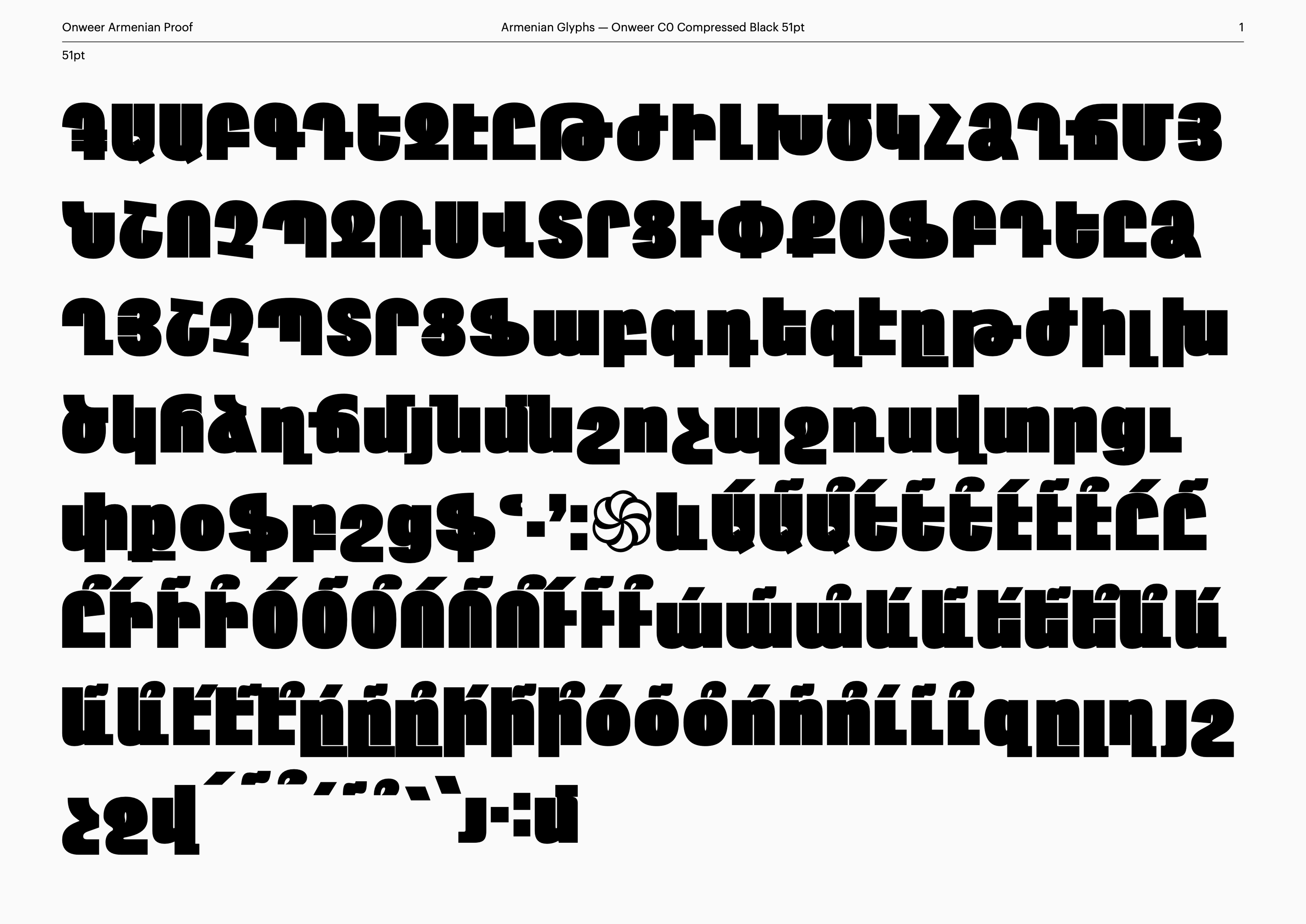
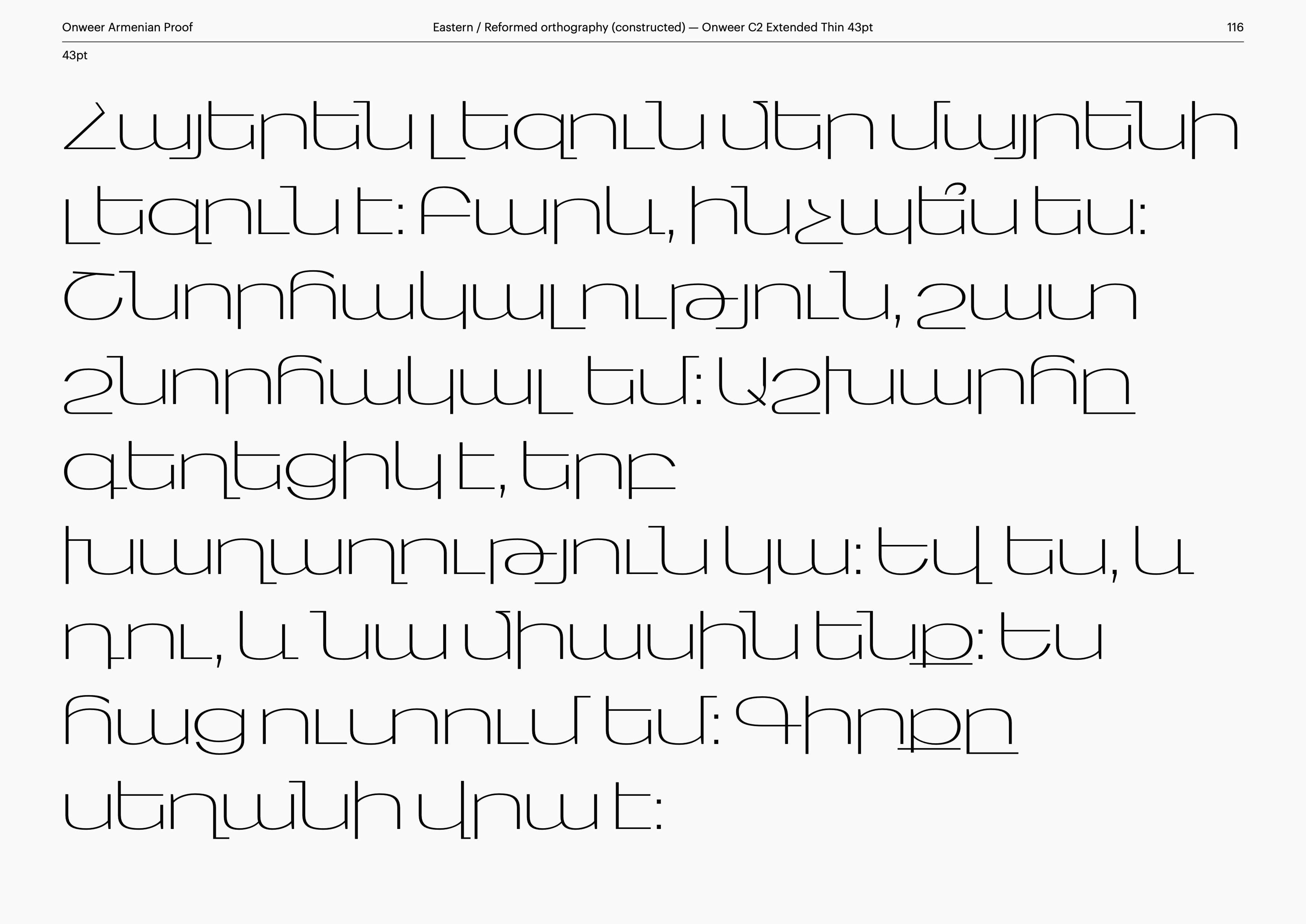
Onweer Armenian by CSTM Fonts, a proofing sample
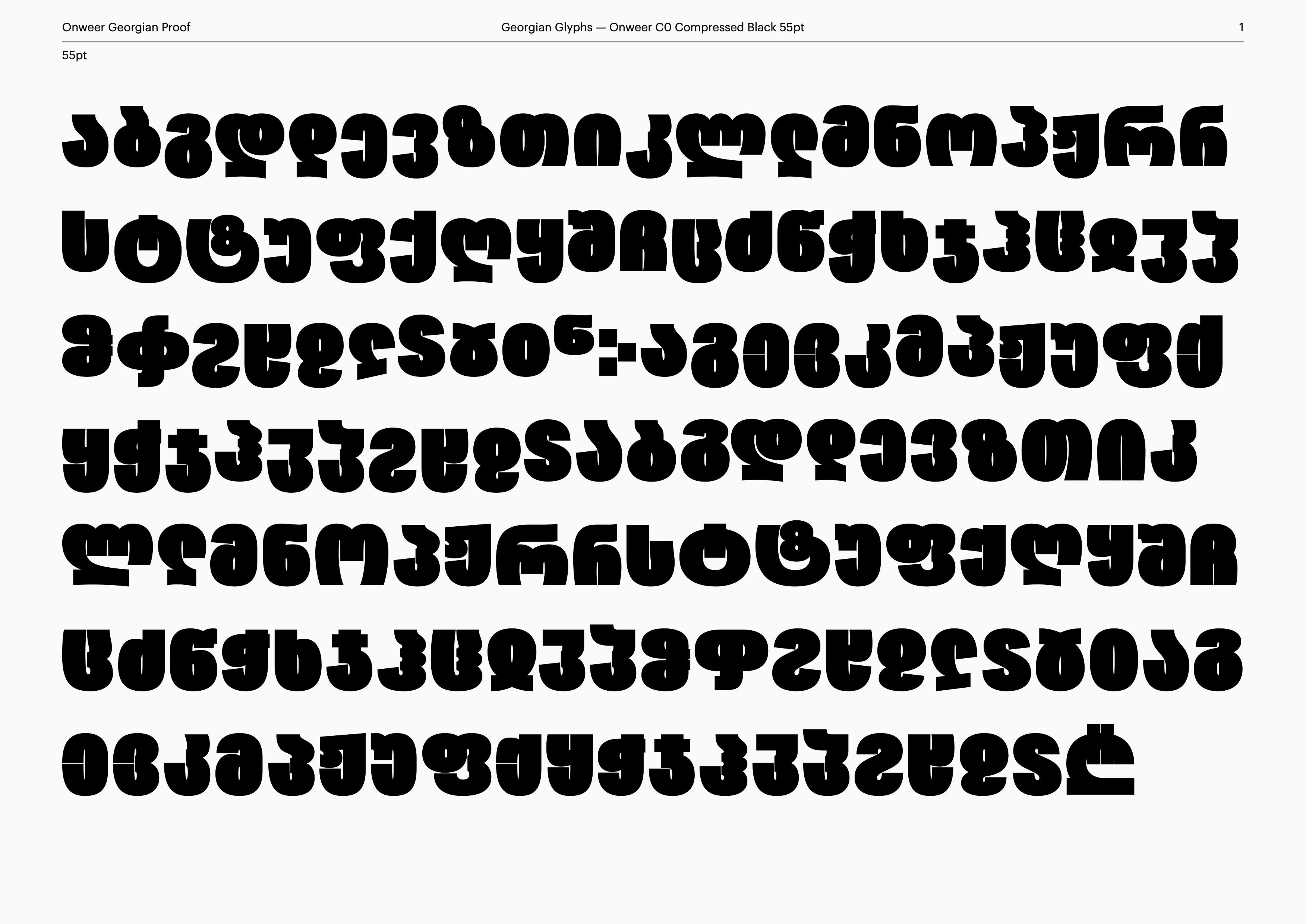
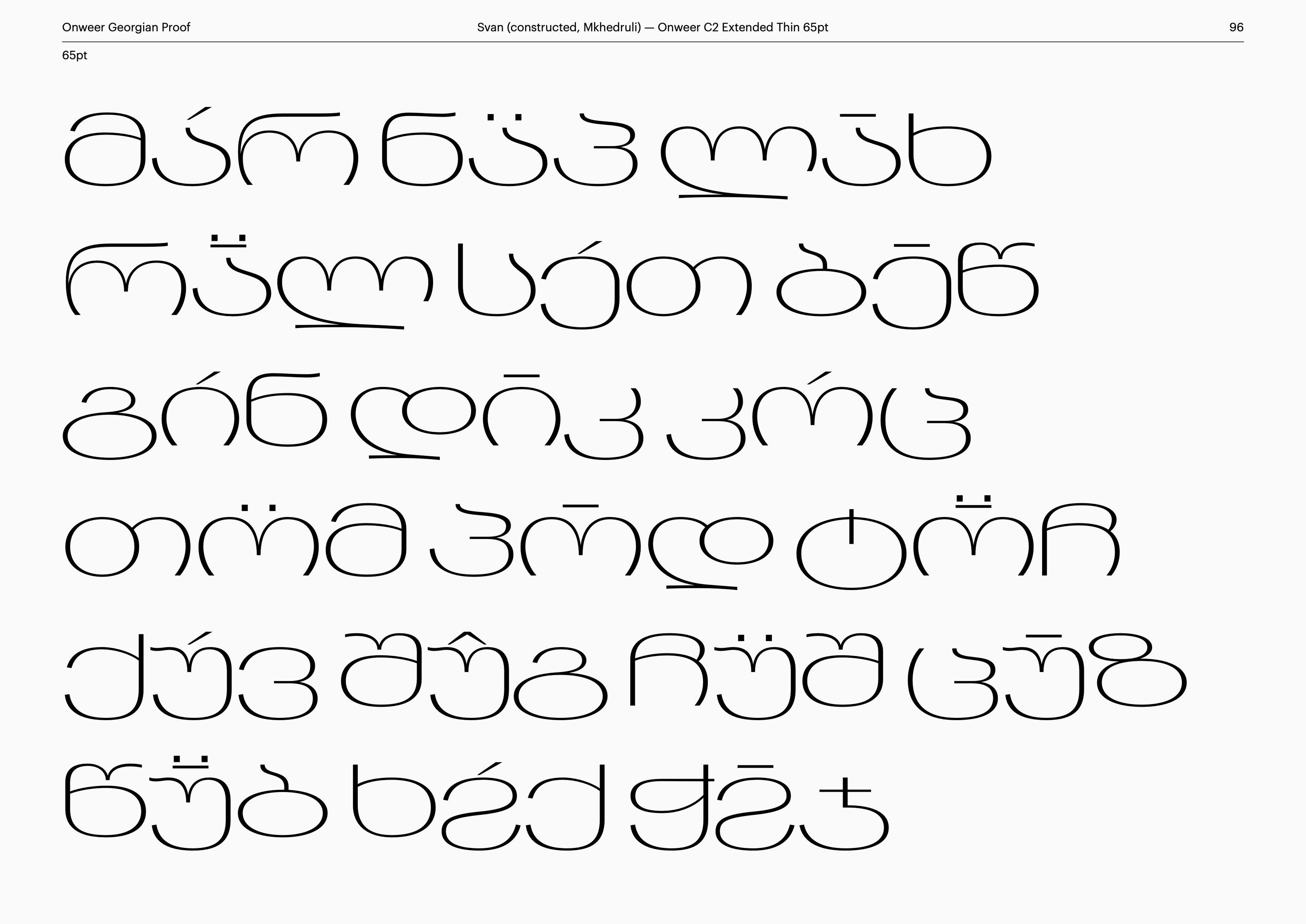
Onweer Georgian by CSTM Fonts, a proofing sample
AL: I was also making a proofer recently and ran into
AI possesses a vast amount of knowledge. It’s not a good idea to ask it to improve something visually, but it can well be consulted on the technical aspects of the process.
IR: Well, sometimes AI tools do funny things. In Onweer, I have over 50 masters, while Yury designed eight for Georgian, saying, ‘You’ll figure out the rest yourself’. And I asked AI to just copy the glyphs from Yura’s eight masters and paste them into all the others. It responded, ‘I can also interpolate everything for you if you
AS: Where is the line between what you can delegate to AI and what you cannot?
IR: The line lies where you have to conceive an idea, create something visually appealing that resonates with you on a graphical level, and you want to control the process yourself.
As type designers, we enjoy seeing beautiful black-and-white something that behaves within the line of text exactly the way we intended it to. That’s my pleasure, and I am not willing to share it with the AI.
Whenever you need to come up with something, to overcome a challenge, a human being is required. After all, when you encounter a design issue, you get back to the fundamental principles you planted into the typeface at the very beginning and review, revisit them. It’s an extremely interesting process. Handing that over to someone or something else would be way too
AL: Obviously, you’d like to keep the creative aspect of the job for yourself. As for the engineering
Nowadays, there’re numerous AI tools where you can just type two or three words and get a ready-to-use font. However, AI can’t do long-term planning or build a system for the future. It can create a rough
In this sense, though, it is in fact quite similar to a typical junior designer. If you tell a junior, ‘Here’s the Latin set, design Cyrillic’, they would certainly complete the task, but the result would need
AS: Erik van Blokland — head of the TypeMedia master programme and one of the main opponents of using AI in type
AL: We do. It seems to me that right now, those working with AI are primarily people who are good at their job and know the drill, but have grown tired of routine tasks. If you’re designing typefaces on your own or as part of a small team, being able to delegate things like this to someone
However, perhaps people who join the field later on will really come to trust AI and rely on it so much that they will no longer be able to assess the quality of its output.
IR: I have a huge amount of respect and affection for Erik, and I have, of course, read his manifesto. And I would agree with
We are all terrified by the idea of a world where a young person, without hesitation, performs all their professional tasks using AI. That’s a horrifying world of AI doctors and AI firefighters. Besides, when we use the term ‘AI’ today, we are typically not referring to actual artificial intelligence, but rather to large language models that have simply been fed vast amounts of human knowledge.
AS: As an educator, what do you plan to do to ensure that we don’t end up in that world?
IR: I rarely discuss this topic with
But in my everyday life, I’m encountering the results of GPT’s work more and more often. I recently received an email written by AI that included a brief also put together by AI. Clearly, I fed both the email and the brief to a different AI tool, asking it to draft a polite refusal. As a result, their AI simply had a conversation with mine.
AL: I believe that education should foster critical
AS: Don’t you feel that the type community is protesting the arrival of AI tools more fiercely than other groups? And doesn’t that result in public LLMs having less typography-related information?
AL: I don’t think so, no. It’s pretty much the same
IR: I feel like the type community is, once again, luckier than other design-related professionals. When it comes to type design, it appears that AI is only stealing jobs from a certain segment of engineers. Actually, one of the reasons Alexander and I are having this conversation today is his remark that we live ‘at the end of the era of font engineering’. And that does seem to be true.
After listening to the Font Tech & AI conference, Alexander also made a hypothesis that everyone will soon enough have their own font
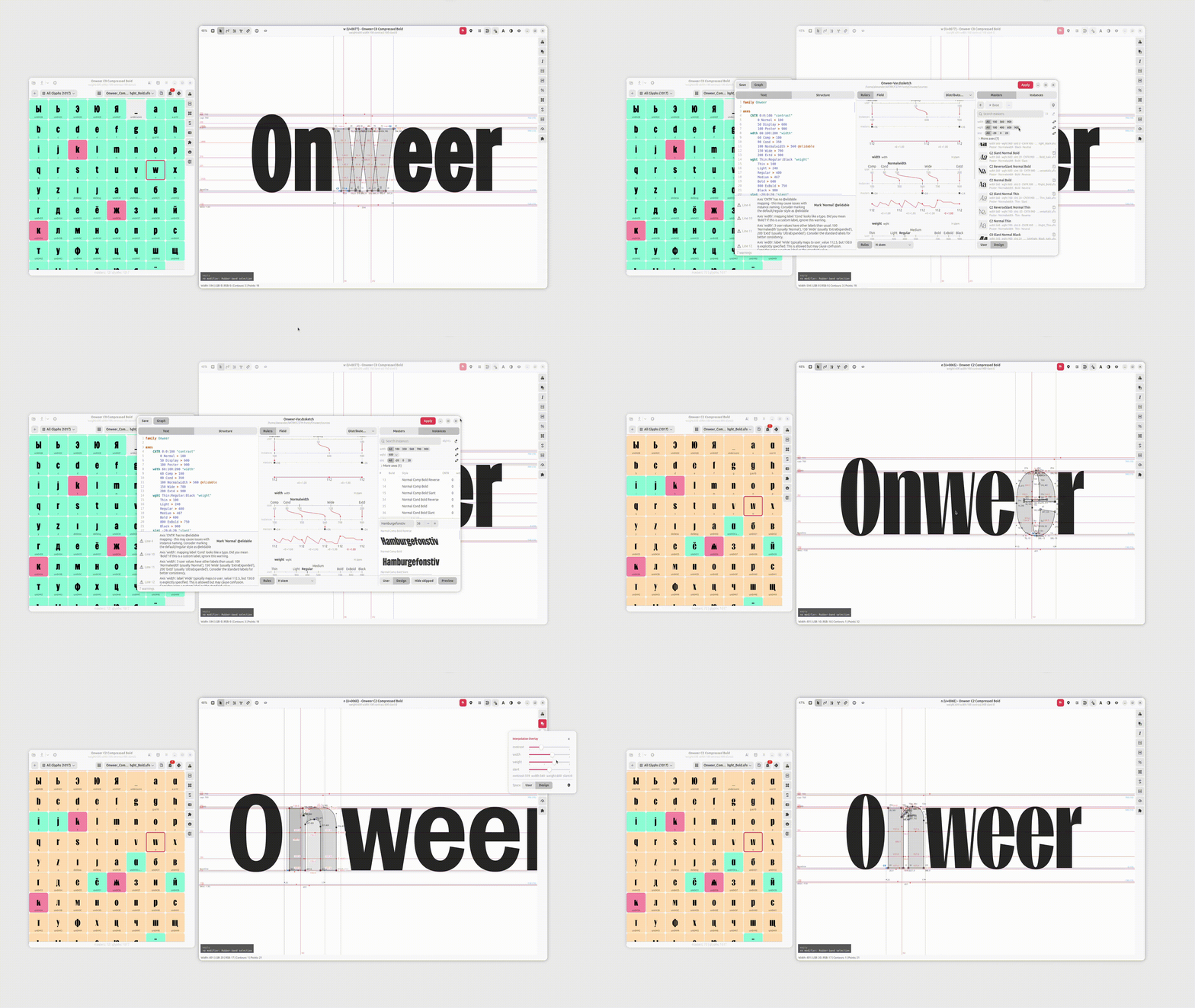 A .ufo font editor for Linux with native designspace support, developed by Alexander Lubovenko
AS: Why does the world need so many font editors?
AL: It’s great, it’s convenient, it allows you to set up your own workflow. When you take someone else’s tool, you have to master it, to adapt to it. You’re essentially agreeing to the decisions that the software’s developer has made for you.
IR: Writing your own font editor software, by the way, perfectly aligns with the concept of Erik van Blokland, who always says that a designer should have complete control over their design work and develop their own set of tools themselves.
I myself would love to have an editor adjusted specifically for me, customised, who knows me and greets me every morning, ‘Hey there, Ilyukha, I’m glad you’re back to draw some letters! What will we work on?’
AS: Let’s assume you can develop your own font editor software. But what if it’s an inexperienced designer or engineer we’re talking
AL: Why not? The cost of creating a tool keeps getting lower and lower. We’ve used FontLab, Glyphs, and RoboFont for many years now. Then Fontra arrived. But over the last three months, I’ve counted about seven new font editors. They keep appearing like mushrooms after
I mean it’s not a typical font editor that you have to figure out, but the kind of software where you’re saying, ‘Today I need this tool and that tool’, and it develops both tools for you to use.
There’s this really great font editor called Counterpunch. It’s a tool with solid AI support. You can enter a request right within the editor, and it will provide a response.
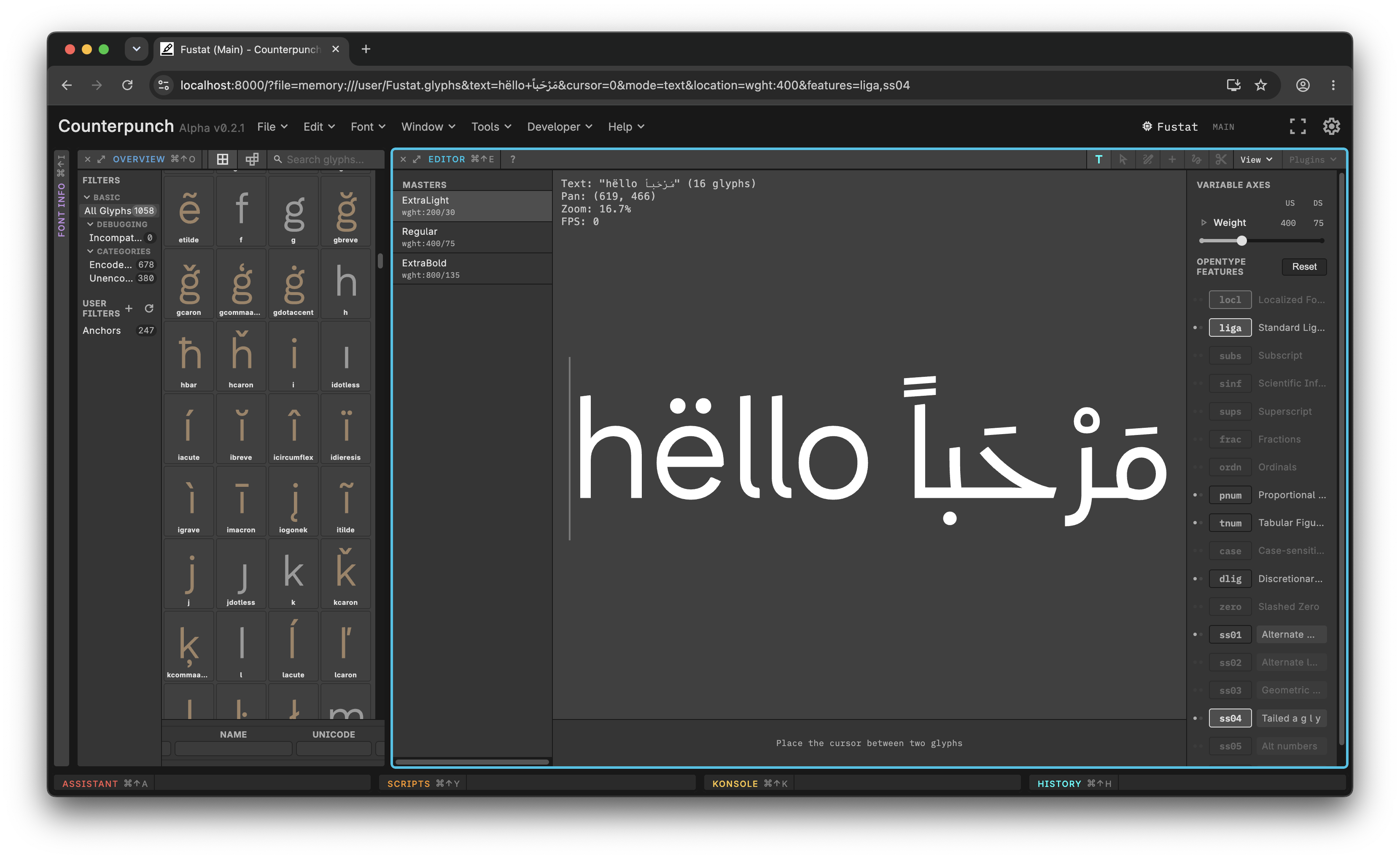 Counterpunch font editor
IR: That’s an interesting way to evolve. I mean, I always talk about the evolution
The same is true for font editors. All of them address different needs. For instance, Fontra Hive is working on the Figmatisation of font production and wants to enable several designers to work on the same typeface within a shared virtual cloud.
It may well
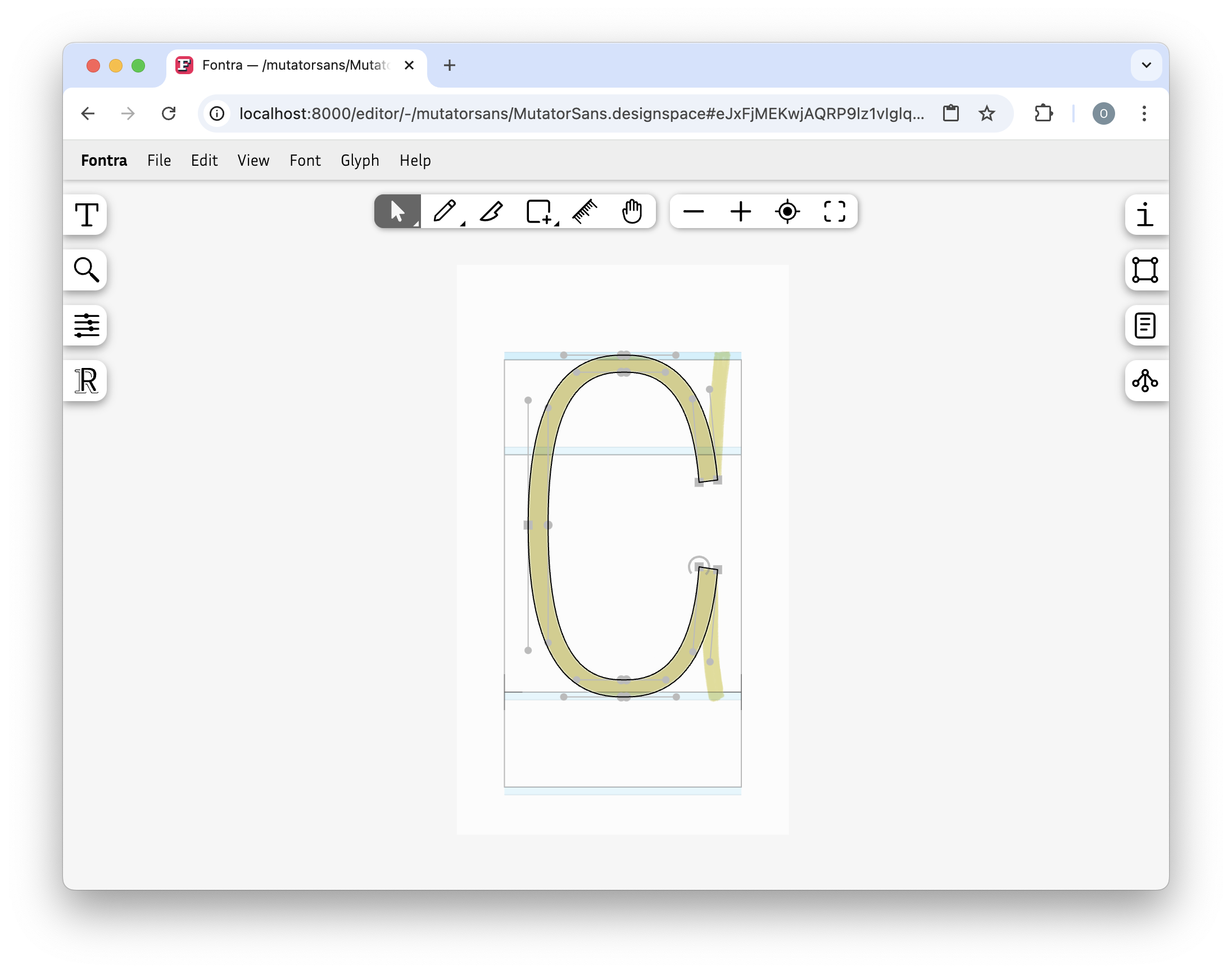 Fontra Hive font editor
AL: A type project can indeed influence your tool set. For instance, I came up with a tool while working on Onweer.
Onweer is about a huge number of masters, over 300 styles. It’s just not realistic to process them all manually. One .designspace file is something about 280 or 200 kilobyte in size. Say, something like RoboFont has DesignSpaceEditor, and I would have had to spend several hours just entering the names of those styles.
And this made me build a tool called Design
I feel like engineering will drift roughly in this direction. Routine tasks of adjusting metrics and features will be handed over to AI, while engineers will still be in charge of building workflows and inventing new tools.
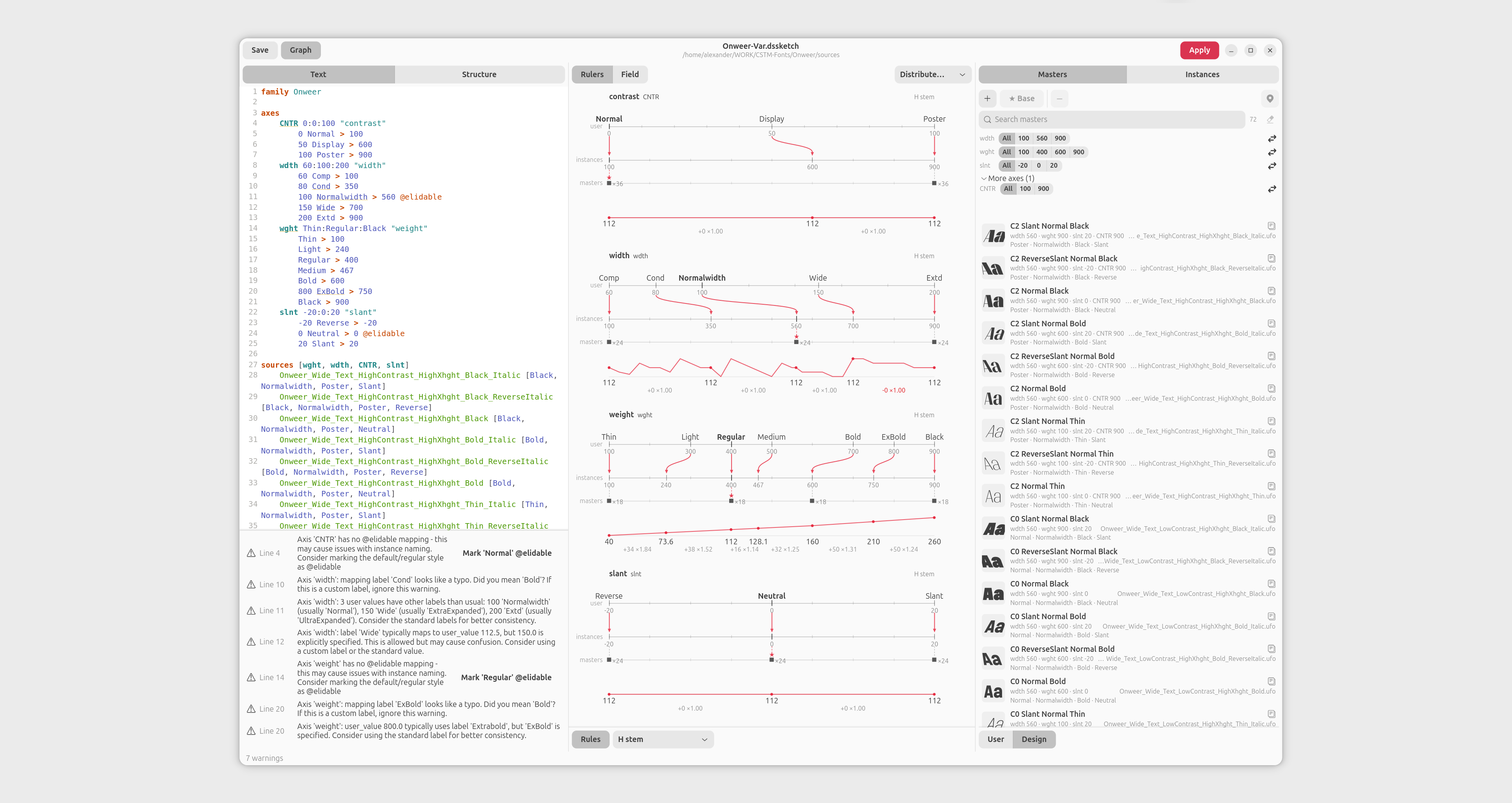 Design Space Sketch, developed by Alexander Lubovenko
AS: Won’t a designer be able to write a tool like that for themselves?
AL: If they understand the task, then
Well, certainly, you could always just type, ‘Build me a great font editor; don’t make any mistakes’. And the AI will even generate something. I’ve tried to enter a prompt like
AS: If everyone will be building their own tools and a font file will require less attention from a font engineer, will typefaces get cheaper?
AL: Yes, that’s exactly what will happen. I think we’ll see the arrival of a huge number of fonts, an influx of poor-quality AI slop, and typefaces will become devalued. And there will be tons of software,
AS: Some say that tokens and a basic subscription to public models may soon get more expensive. What will happen to your work if that occurs?
AL: We’ll just need to pay more money to get our work done.
AS: Wouldn’t you go back to doing everything by hand?
AL: I haven’t written any code since January, I think. It’s not that I’ve forgotten how
On the one hand, access to AI will become more expensive, since AI models are offering users more and more opportunities. I also think we will most likely see some regulation, because now it’s just anarchy. Anyone can vibe-code a better version of Photoshop and potentially compete with Adobe.
On the other hand, the Chinese are now really strong when it comes to AI, and their models are open-source. They’re not as good as ChatGPT or Claude, and DeepSeek has only just learned to do what Claude was capable of about six months ago. But Chinese models have a great deal
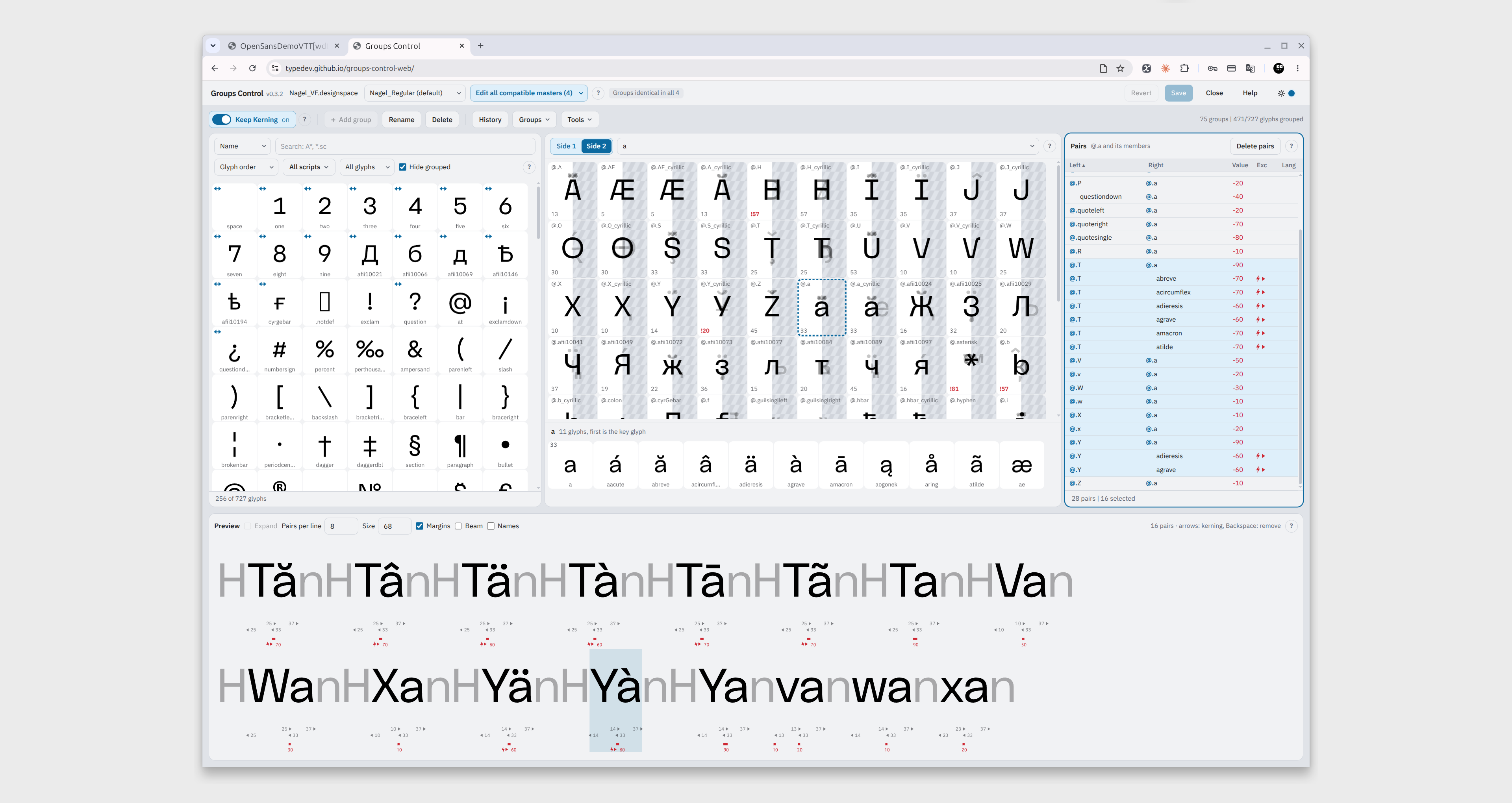 A web application for managing kerning groups in .ufo fonts, developed by Alexander Lubovenko
AS: Who should I subscribe to or follow to stay up to date on how font engineers work with AI?
AL: I haven’t come across any reviews specifically focused on what you mentioned. I just go to Reddit, on r/typography or r/fonts — every now and then someone posts, ‘Look, I’ve made a great tool!’
AS: Say, technical aspects of fonts are now handled by AI. Type designers are writing highly specialised, practical tools for themselves. What will people we currently refer to as ‘font engineers’ do?
AL: I don’t know. Things are changing so fast today I can’t even imagine what we’ll be doing a year and a half from now.
AS: If someone who has completed a master’s programme in type design approaches you saying, ‘I want to pursue a career as a font engineer’, would you try to talk them out of it?
AL: I don’t think I would. It’s worth a try. Maybe I am not entirely right, and engineering isn’t actually dying. There are plenty of things that we have prematurely declared dead. At the same Font Tech & AI conference, hinting came up surprisingly often. But we’ve been declaring it dead for about five years
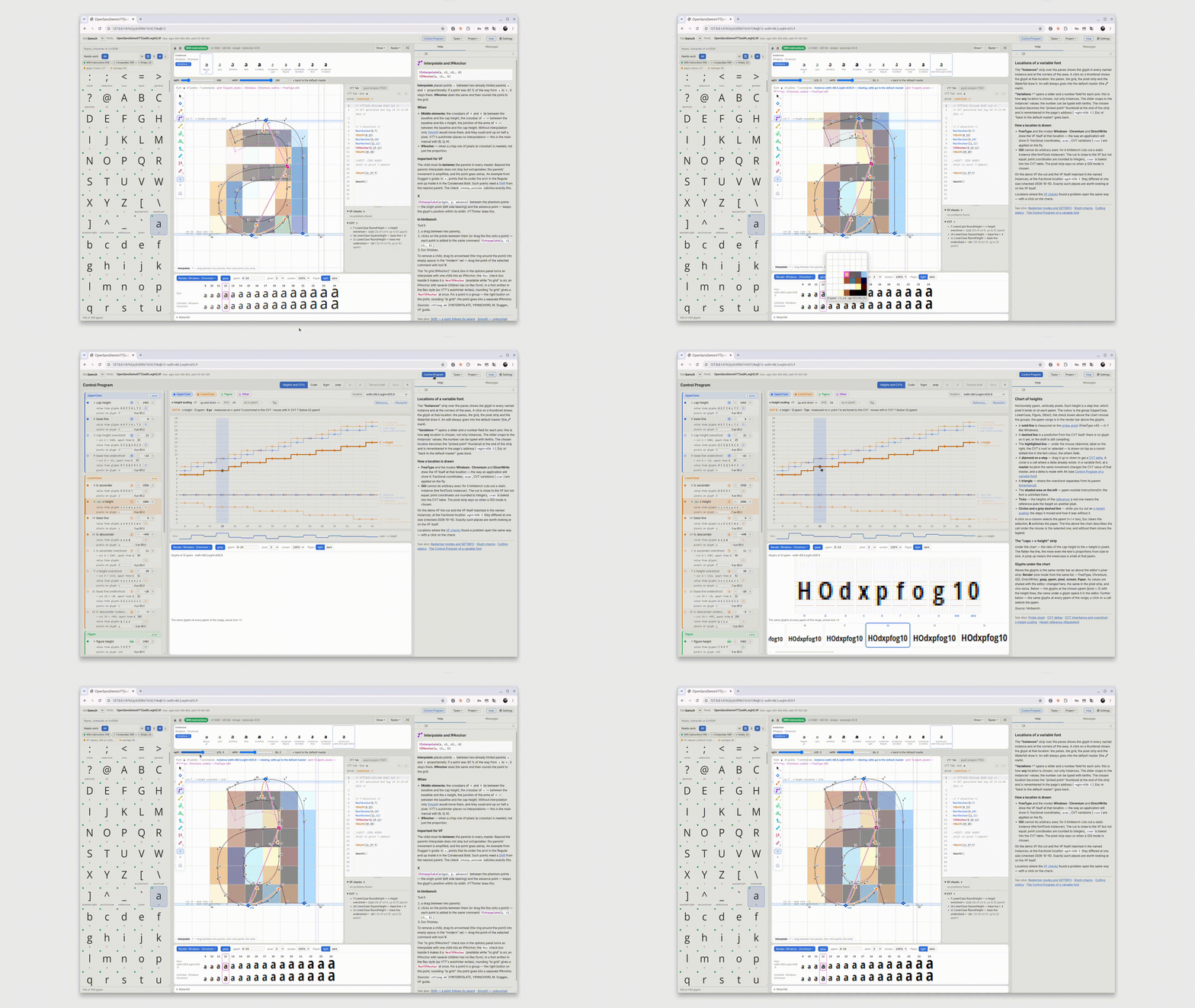 An application for TrueType hinting of variable fonts, developed by Alexander Lubovenko
I believe that an engineer will always find something to use as a starting point and come up with something new.